

Sinharaja

Weligama Taxi & Shuttles Number 01

Weligama Taxi & Shuttles Number 01

Hero Banner
Sabaragamuwa & Southern Province Β· UNESCO Rainforest

The last forest evolution
never left

Sinharaja Forest Reserve is Sri Lanka's last primary rainforest β€” a UNESCO World Heritage Site of extraordinary biological richness where 19 endemic bird species, dozens of endemic reptiles and the rarest flora in Asia survive in a forest undisturbed since before human memory.

🦜

Endemic Birds

19 of 26 Species

🌑️

Avg. Temperature

18 – 27 Β°C

🌿

Forest Area

11,187 Hectares

✈️

From Colombo

155 km Β· 3.5 hrs

The Last Primary Rainforest in Sri Lanka
UNESCO RainforestπŸ“ Sinharaja Interior

The Last Primary Rainforest in Sri Lanka

01 / 04
β€œThe mixed-species flock passes overhead and in fifteen minutes you have seen more endemic species than in a week elsewhere β€” and the forest keeps going, the birds keep coming, and the morning keeps producing gifts.”

Birds

The Endemic Birds & the Mixed-Species Flocks

Sinharaja's birdlife is the primary reason most visitors make the journey to this remote corner of the southern highlands. Of Sri Lanka's 26 endemic bird species β€” birds found on this island and no other place on earth β€” Sinharaja shelters 19 within its boundaries, a concentration with no equivalent in South Asia. The most celebrated phenomenon is the mixed-species feeding flock: a loose association of 15–25 species moving together through the forest in a feeding collaboration that has been documented and studied here for decades. A single flock may contain the Sri Lanka blue magpie (one of the world's most strikingly beautiful corvids), the Sri Lanka crested drongo, the red-faced malkoha, the orange-billed babbler, the brown-capped babbler, the ashy-headed laughingthrush and the white-faced starling β€” all moving through the canopy simultaneously, in a morning spectacle that is genuinely breathtaking. These flocks move through specific territories at predictable times, and experienced guides who know the forest intimately can position a group directly in the flock's path. The result β€” standing in primary rainforest as this cascade of endemic colour passes overhead β€” is the finest wildlife experience available in Sri Lanka.

Endemic birds in Sinharaja forest canopy Sri Lanka
Ecosystem

The Forest Itself β€” Structure, Ecology & Ancient Continuity

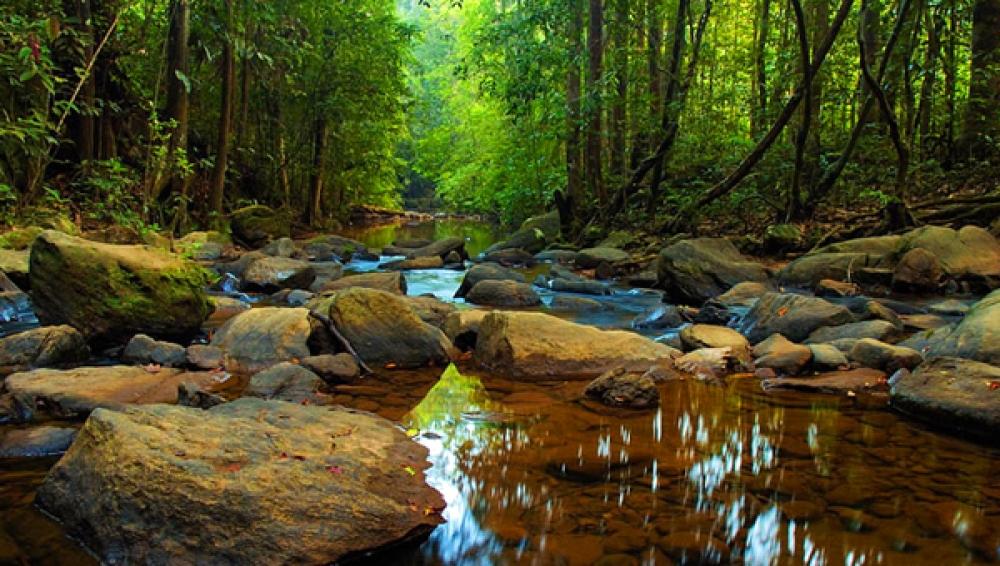
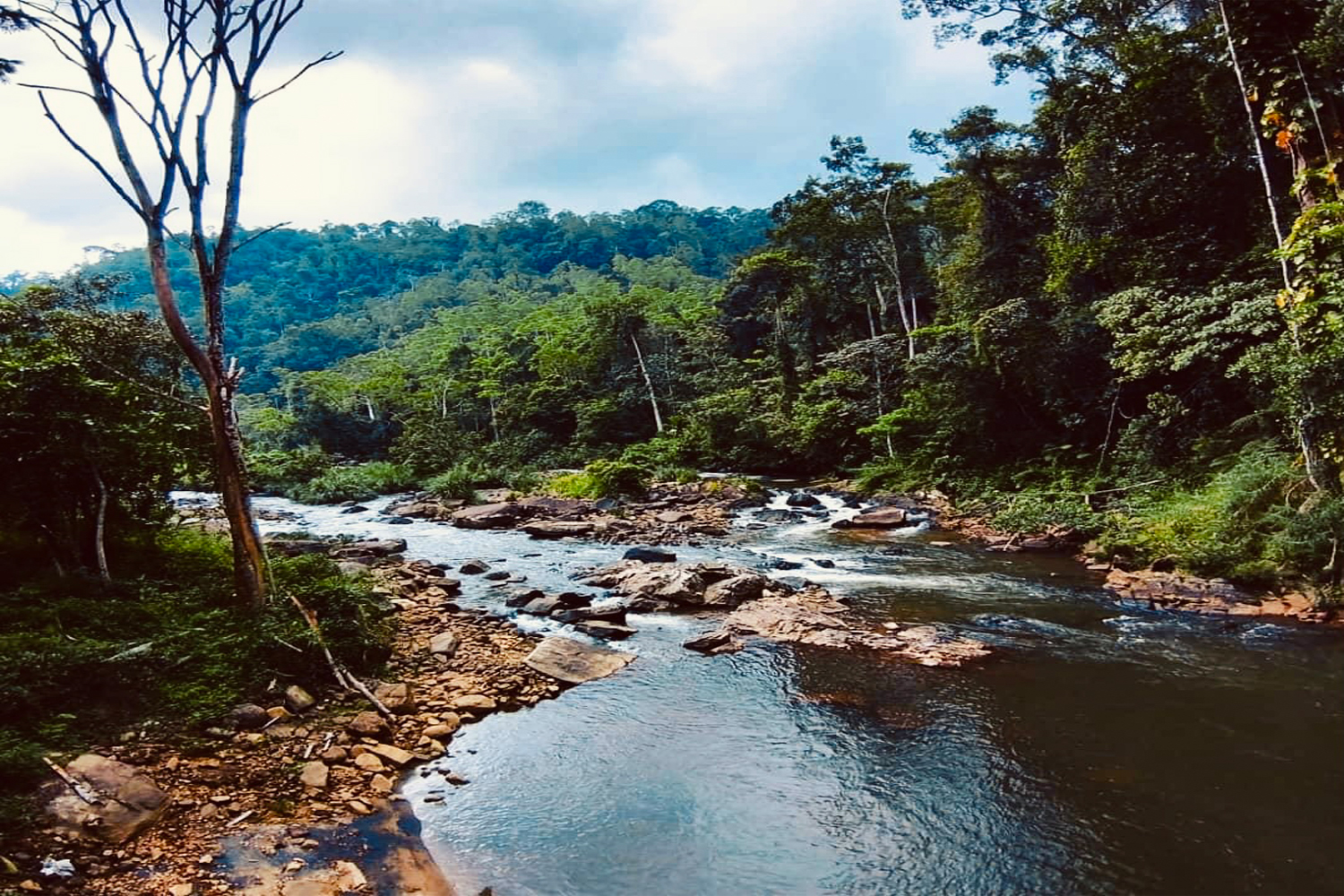
Sinharaja is not just a collection of remarkable species β€” it is a functioning ancient ecosystem of extraordinary complexity. The forest rises in distinct layers from the richly vegetated floor to the emergent trees breaking the canopy at 45 metres or more. The dominant tree families β€” Dipterocarpaceae, Myristicaceae, Clusiaceae β€” form the upper storeys; beneath them, a dense middle layer of palms, smaller trees and the juveniles of the canopy species compete for light in the perpetual twilight of the forest floor. The forest receives between 2,500 and 5,000 millimetres of rainfall annually depending on location, fed by both monsoons, and the resulting humidity creates the conditions in which endemic species have evolved and specialised over millions of years. The Sinharaja watershed feeds seven major rivers that supply water to the surrounding lowlands, and the forest's role in regulating the regional hydrology is as important as its biodiversity. Walking its trails β€” which follow old logging roads, river courses and ridge paths cut by researchers β€” is a physically immersive experience: the forest is genuinely wet, deeply shaded, intensely alive and extraordinarily beautiful.

Dense canopy of Sinharaja primary rainforest Sri Lanka
Visit Planning

Planning Your Visit β€” Guides, Trails & What to Bring

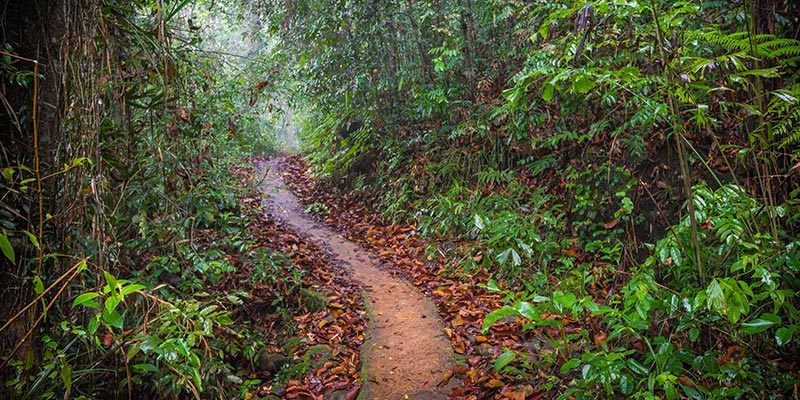
Entry to Sinharaja requires a permit from the Forest Department, available at the ranger stations at Kudawa (the main southern entrance, 3 km from Deniyaya) and Pitadeniya. A registered guide is not merely recommended but genuinely essential β€” the forest is dense, the trails are unmarked beyond the main routes, and an expert guide who knows the birds by call will transform a pleasant jungle walk into one of the most memorable natural history experiences of your life. The best guides have been working these trails for decades and can locate a mixed-species flock within minutes. Wear long sleeves, long trousers and ankle-covering footwear against leeches, which are abundant after rain and harmless but numerous. Bring at least two litres of water, a light waterproof jacket and an 8Γ—42 binocular β€” heavy telephoto lenses are impractical on the trail. The best birding window is 5:30–10:00 AM. Stay at one of the forest-edge lodges near Kudawa for early access; the most dedicated visitors stay two nights to catch the dawn chorus on consecutive mornings.

Forest trail in Sinharaja rainforest with guide Sri Lanka

Naturalist's Guide

Everything you need to know

🦜

Birding Strategy

Arrive at the Kudawa entrance by 5:30 AM to catch the dawn chorus. The mixed-species flocks begin moving at first light and are most active from 6:00–9:30 AM. A good guide will take you to where the flock was last seen and intercept it on its morning route.

πŸŽ’

What to Bring

Long-sleeved shirt and trousers (leeches are harmless but numerous after rain). Ankle-covering trail shoes or boots. Light waterproof jacket β€” the forest creates its own rain. 8Γ—42 binoculars. At least 2 litres of water. High-energy snacks. Change of dry clothes for after.

πŸ—ΊοΈ

Guides & Permits

A Forest Department permit is required β€” available at Kudawa ranger station. A registered guide is essential, not optional. The best guides cost LKR 3,000–5,000 per day and are worth every rupee. Book your guide through your accommodation the day before.

πŸ›

Leeches

Land leeches are abundant after rain β€” they are completely harmless but can be surprising. Tuck trousers into socks and apply salt, tobacco or insect repellent to your boots and ankles before entering. Carry salt or a cigarette lighter for removal. Don't let them put you off.

πŸ›

Where to Eat

Stay at one of the forest-edge lodges near Kudawa and take full-board β€” meals are typically home-cooked Sri Lankan food and excellent. There are no restaurants near the forest entrance. Carry snacks for the trail itself.

🏨

Where to Stay

Martin's Simple Lodge and the Forest Department bungalows are legendary among birders for their proximity to the forest. Book weeks ahead for weekends and school holidays. An overnight stay is strongly recommended over a day trip from the coast β€” two nights is ideal.

Location

Find Sinharaja

πŸ“

Sinharaja Forest Reserve

Sabaragamuwa & Southern Province, Sri Lanka Β· UNESCO World Heritage

🦜 Endemic Birds🌿 Rainforest🦎 Reptiles

From Colombo

155 km Β· ~3.5 hrs

Forest Area

11,187 Hectares

GPS Coordinates

6.4070Β° N, 80.4600Β° E

Ready to enter the ancient forest?

Let us transfer you from anywhere in Sri Lanka to Sinharaja's forest gateway β€” comfortable, reliable and always on time.