

Weligama

Weligama Taxi & Shuttles Number 01

Weligama Taxi & Shuttles Number 01

Southern Province Β· Surf Bay

Where the Indian Ocean
teaches you to ride

Weligama is the southern coast's most welcoming bay β€” a wide crescent of warm ocean where beginner surfers find their feet, stilt fishermen balance on ancient poles, blue whales feed just offshore, and a legendary private island sits 100 metres from the beach, draped in tropical gardens.

πŸ„

Surf Level

Beginner Friendly

🌑️

Avg. Temperature

27 – 32 Β°C

πŸ‹

Whale Watching

Nov – April

✈️

From Colombo

150 km Β· 2.5 hrs

The Gentlest Wave on the Southern Coast
Surf TownπŸ“ Weligama Bay

The Gentlest Wave on the Southern Coast

01 / 04
β€œWeligama moves at the pace of the wave β€” unhurried, generous, and endlessly forgiving. It is the kind of place that makes you cancel your onward journey and stay another week.”

Surf

Learning to Surf in the World's Most Forgiving Bay

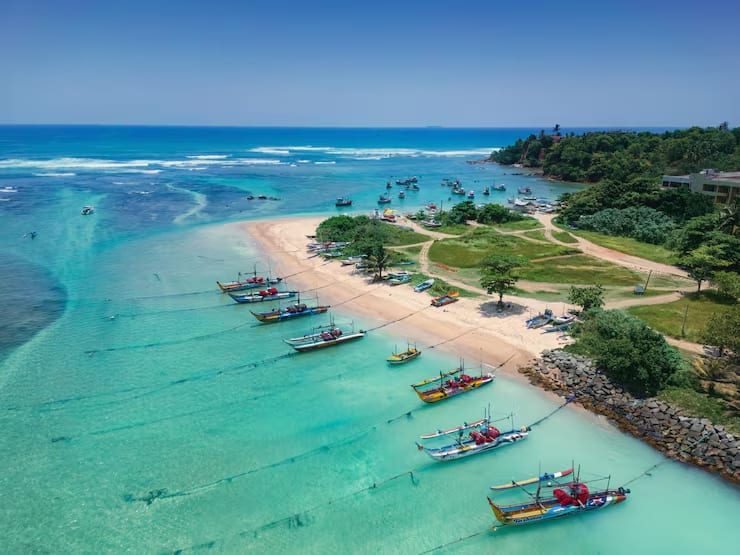
Weligama is widely regarded as the finest place in Sri Lanka β€” and one of the best in Asia β€” to learn to surf. The bay's geography creates the ideal conditions: a broad, gently shelving sandy bottom produces slow-rolling waves that break consistently, give the learner plenty of time to find their feet, and forgive mistakes with a soft landing in warm, waist-deep water. Surf schools line the beach from end to end, their instructors a mix of local legends and internationally trained coaches. A morning lesson typically runs two hours and most beginners stand up within the first session. Once past the basics, Weligama offers progression β€” the right-hand point break at the eastern end of the bay produces longer, more powerful rides for those ready to move beyond the shore-break. The town's laid-back, non-competitive atmosphere means the water is welcoming to every level.

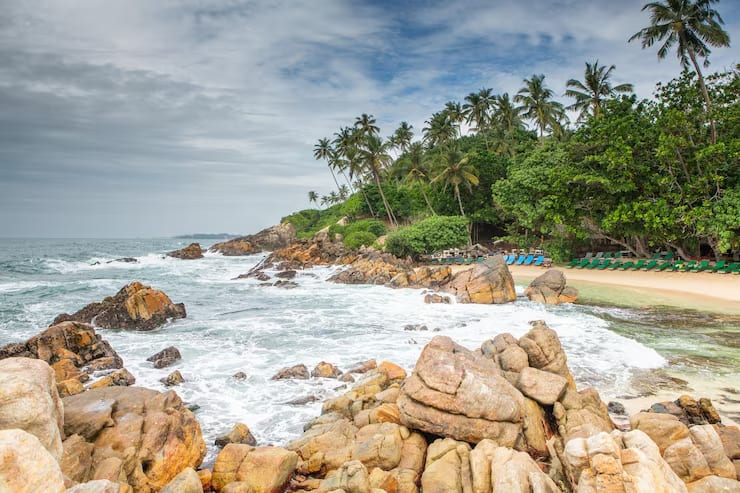
Surfing at Weligama beach Sri Lanka
Culture

The Stilt Fishermen & a Coastline Like No Other

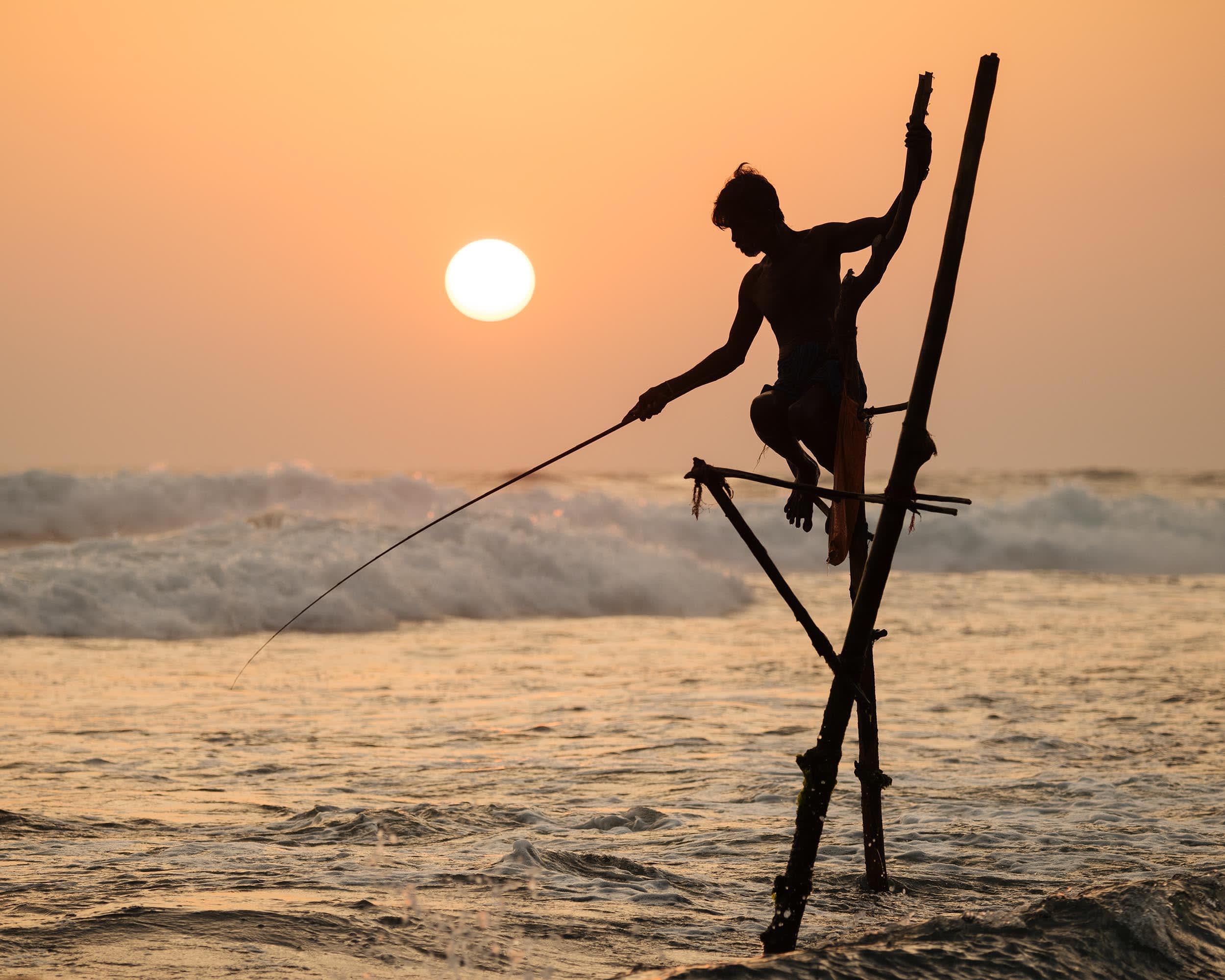
The image of a Weligama stilt fisherman silhouetted against a blazing sunset has become one of the defining photographs of Sri Lanka, and the reality lives up to the picture. Early morning β€” before the tour buses arrive β€” is the finest time to watch the fishermen at work. They settle onto their poles with practised ease, line trailing into the current below, waiting with extraordinary patience while the sea laps around the base of their perches. The surrounding coastline rewards exploration in both directions. Heading east toward Mirissa, a series of rocky headlands frames small coves of perfect sand. West toward Ahangama and Galle, the coast road passes hidden surf breaks, coconut estates running to the water's edge and ancient temples built on reef-ringed promontories. The daily fish market in the harbour β€” loud, colourful, smelling powerfully of the sea β€” is a scene entirely of its own.

Stilt fishermen at Weligama Sri Lanka
Ocean

Whale Watching, Taprobane & Life on the Bay

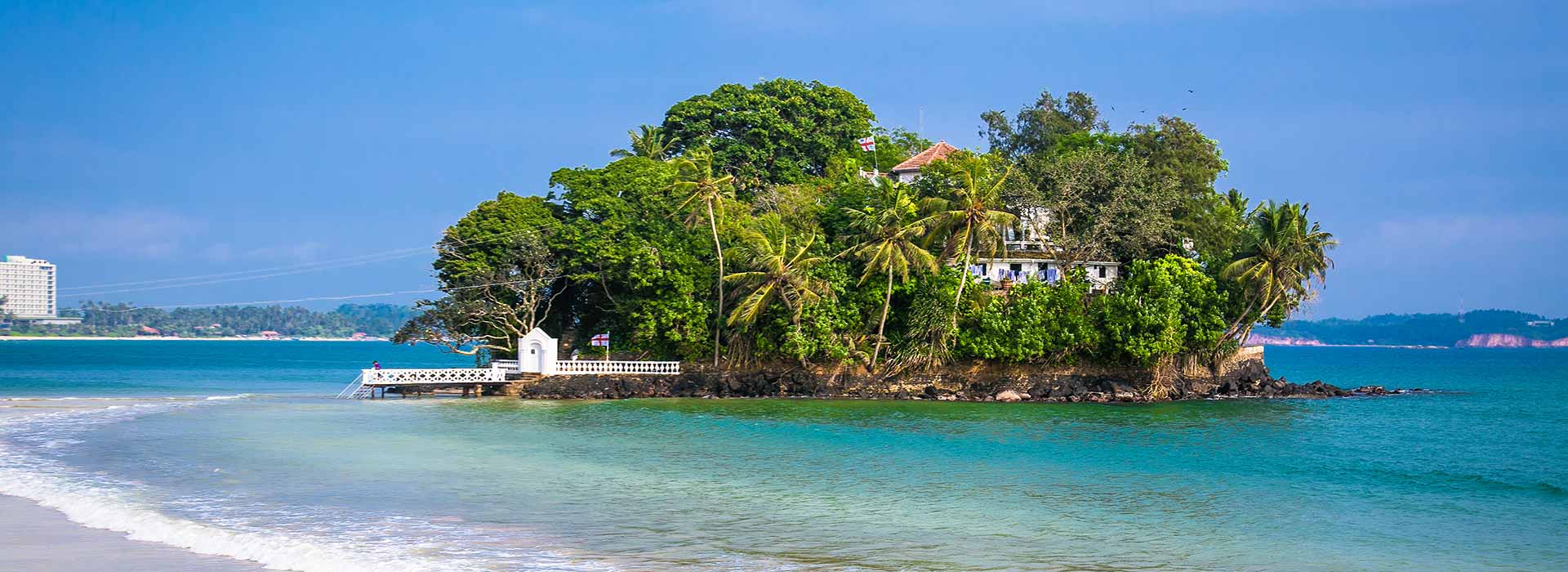
Between November and April, the waters south of Weligama host one of the planet's most spectacular wildlife events: the blue whale season. Blue whales β€” the largest animals in the history of life on earth, reaching 30 metres and 150 tonnes β€” gather to feed in the deep submarine canyon running close to the southern coast. Boat trips from Mirissa harbour, 6 kilometres east of Weligama, routinely encounter multiple blue whales, sperm whales, spinner dolphins and occasionally pygmy blue whales in a single morning. Back in the bay, Taprobane Island sits 100 metres offshore β€” a volcanic outcrop the size of a football pitch draped in tropical gardens and crowned by a single extraordinary villa built in the 1920s by Count de Mauny-Talvande. Paul Bowles wrote here; Tennessee Williams visited; and today the island remains one of the most romantic private retreats in Asia, available to rent in its entirety. Weligama's fish market, curd stalls and kottu roti vendors ensure that life at street level is every bit as rich as what unfolds on and beyond the water.

Taprobane island and Weligama bay

Traveller's Notes

Everything you need to know

πŸ„

Surf Lessons

Book a 2-hour morning lesson with any beach school β€” rates run around LKR 3,000–4,500 including board and rash vest. Go early (7–9 AM) before the onshore wind picks up and softens the waves.

πŸ‹

Whale Watching

Season is November to April. Depart from Mirissa harbour (6 km east) at 6:00 AM. Book with an MWAF-certified operator for responsible wildlife encounters. Bring sea-sickness tablets if prone.

🎣

See the Stilt Fishermen

Fishermen work best light in early morning (6–8 AM) and late afternoon. They are genuine working fishermen β€” a small tip is appreciated if you photograph them. Best viewed from the road east of the bay.

πŸ›Ί

Getting Around

Weligama is walkable end-to-end in 20 minutes. Tuk-tuks to Mirissa cost around LKR 300; to Galle around LKR 1,500. A full-day taxi covers Weligama, Mirissa, Matara and Dondra comfortably.

πŸ›

Where to Eat

The stretch of road behind the beach has excellent cafes. Try buffalo curd with treacle from roadside stalls β€” a southern Sri Lanka specialty. Weligama Bay Resort and The Mango Tree are reliable for evening dining.

🏨

Where to Stay

Beachfront guesthouses along the bay road offer the most direct surf access. Boutique villas in the lanes behind the beach are quieter. Book two months ahead for the December–March peak season.

Location

Find Weligama

πŸ“

Weligama Bay

Southern Province, Sri Lanka Β· Beginner Surf Capital

πŸ„ SurfingπŸ‹ Whales🎣 Fishing

From Colombo

150 km Β· ~2.5 hrs

To Mirissa

6 km Β· 10 min

GPS Coordinates

5.9724Β° N, 80.4303Β° E

Ready to catch your first wave?

Let us transfer you from anywhere in Sri Lanka straight to Weligama's bay β€” comfortable, reliable and always on time.