Nilwala Crocodile Watching

Weligama Taxi & Shuttles Number 01

Weligama Taxi & Shuttles Number 01

Hero Banner
Matara · Wild River Safari

Sri Lanka's wildest
river safari

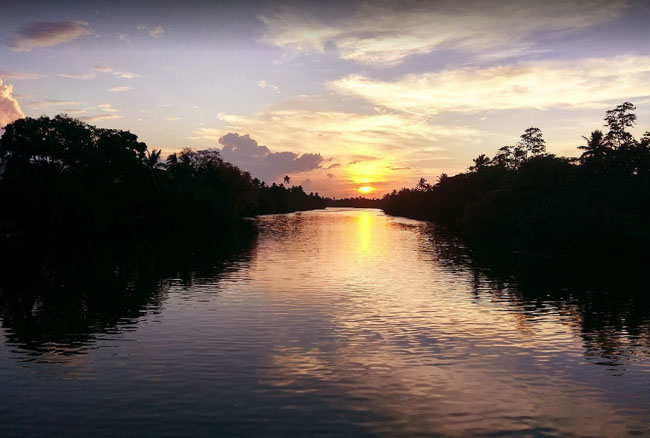
The Nilwala river runs through Matara to the Indian Ocean, threading mangrove forests, fishing villages and brackish creeks where wild saltwater and mugger crocodiles share the same waters. A 2-hour morning boat safari is the closest thing to a genuine river wilderness available on the south coast — less polished than the Madu, considerably wilder, and reliably extraordinary.

What You'll See

Sighting probability on a typical morning safari

Crocodiles

Almost certain

Both species, 5–15+ sightings

Water Monitors

Very common

Basking on every bank

Kingfishers

Very common

Up to 6 species per trip

Sea Eagles

Likely

Patrolling the open river

When To Go

Time of day matters more than time of year

6:30 AM

Best

Crocs basking, birds active

8–10 AM

Good

Still active, getting warmer

10–3 PM

Quiet

Crocs in water, less visible

4:30 PM

Recovery

Late afternoon basking

Reptile

Saltwater & mugger crocodiles

Mangrove

Estuarine forest channels

Avian

Kingfishers, eagles, herons

Local

Fishermen & village life


Nilwala · The encounterReptileSaltwater & mugger crocs

The Crocodiles of the Nilwala

Two species, both present, both wild — the saltwater and the mugger

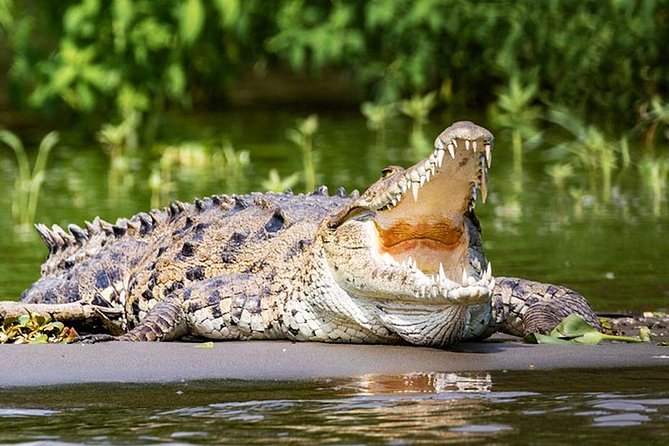
The crocodiles begin appearing within the first 15 minutes of the boat leaving the Matara jetty, and they continue appearing throughout the safari — sometimes a single nostril and a pair of eyes barely breaking the brown water, sometimes a 3-metre saltwater male hauled out on the muddy bank in unmistakable full view. The saltwater crocodile, locally known as the geta kimbula, is the larger of the two species and grows to 4 or 5 metres in mature males; it dominates the lower river where the water becomes brackish and the mangroves take hold. The mugger or marsh crocodile — haala kimbula — is smaller (typically 2 to 3 metres at maximum) and prefers the cleaner upper reaches of the river, where the boat operators usually break the safari for a quieter stretch of pure freshwater observation. Both species are most often seen basking on the muddy banks during the cooler parts of the day — early morning and late afternoon — when they need to thermoregulate after a cool night in the water. The midday hours can be quieter as the crocodiles return to the cooler river. The boat operators give a wide and respectful margin to every animal: 5 to 10 metres minimum, the engine cut to a slow idle, no sudden movements. The crocodiles are wild and the river has a long history of human-crocodile conflict; the rule of staying inside the boat is non-negotiable and the operators enforce it.

🌅

First boat at 6:30 AM is the most reliable for sightings

🦎

Saltwater crocs in lower river, muggers upstream — both seen on most trips

📷

300mm lens minimum for crocodile portraits — boats keep their distance

⚠️

Stay seated and inside the boat at all times — non-negotiable

The Crocodiles of the Nilwala
Reptile
Saltwater & mugger crocs

Nilwala · The settingMangroveEstuarine forest channels

The Mangrove Channels

A wilder, less-touristed alternative to the Madu River

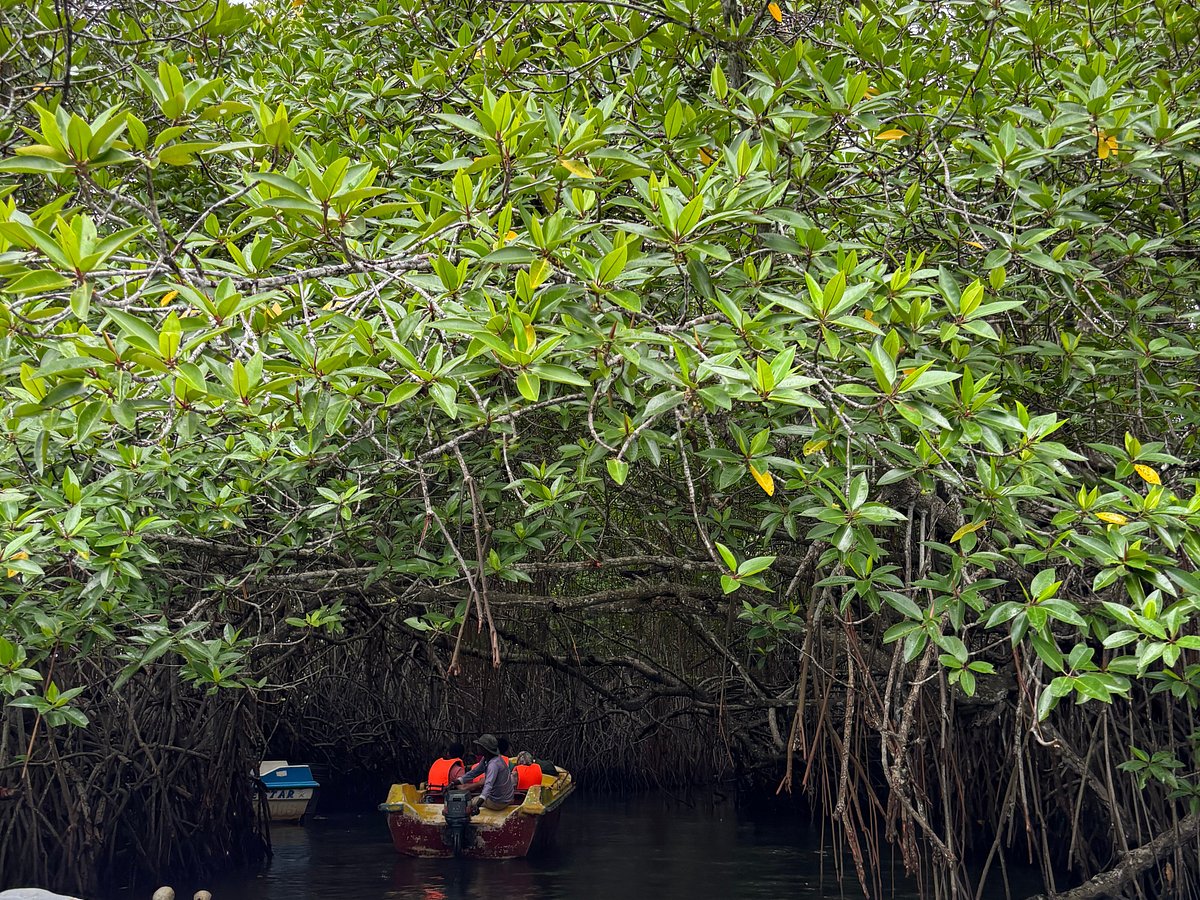
The mangrove section of the Nilwala typically forms the second half of the boat safari, with the operator turning off the main river channel into a series of progressively narrower brackish creeks that wind back into the forest. The mangrove forest itself is a working ecosystem — fishermen lay traditional nets in the deeper pools, juvenile fish shelter among the roots, water monitor lizards bask on every horizontal surface — and the boats move through it slowly, the engine kept low, the only sounds the occasional kingfisher call and the soft splash of the water against the prop-roots. Several distinct species of mangrove tree are visible along the route — the towering red mangrove (Rhizophora mucronata) with its dramatic arching prop-roots, the black mangrove (Avicennia marina) with its breathing roots poking from the mud, and clusters of nipa palm (Nypa fruticans) lining the quieter back-channels. The shade is deep and continuous in places, and the temperature in the mangrove channels can be 5 to 8 degrees cooler than out on the main river — a welcome relief on a hot morning. The narrowest channels are wide enough only for a single boat, and at low tide the prop-roots can be so close on either side that the rider can almost touch them. Compared to the more polished Madu River safari from Balapitiya, the Nilwala mangroves feel less curated and more authentic — fewer staged stops, fewer souvenir vendors, more genuine forest.

🌳

Three native mangrove species visible — guides will point them out

🌡️

5–8°C cooler in the channels — light layer useful for early starts

🌊

Best at low to mid tide — high tide hides the prop-root architecture

🤫

Less touristed than the Madu — more authentic, more wildlife

The Mangrove Channels
Mangrove
Estuarine forest channels

Nilwala · Avian wildlifeAvian30+ resident species

Birds of the Nilwala

Kingfishers, eagles, herons and egrets in extraordinary diversity

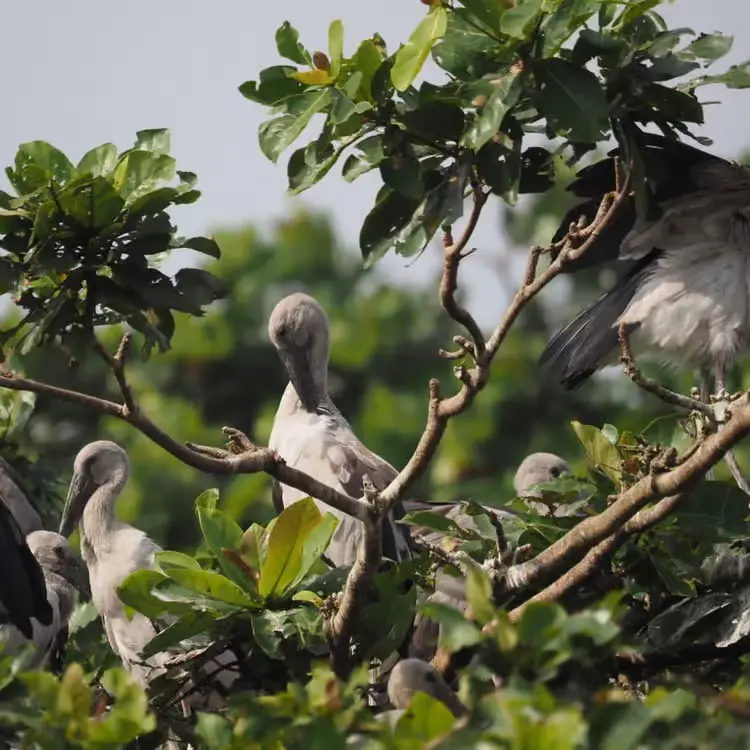
The kingfishers are the headline avian attraction — in a single morning, an attentive rider can routinely tick off the common kingfisher, the white-throated kingfisher (the dazzling turquoise-and-chestnut bird that perches on every other riverside branch), the stork-billed kingfisher (a heavyweight species with an outsize crimson bill), the black-capped kingfisher, the pied kingfisher, and the diminutive lesser pied kingfisher. The fish eagles are the next-most-impressive group: the grey-headed fish eagle and the lesser fish eagle both patrol the river, often visible perched high in dead trees on the bank or flying low over the water on the hunt. The herons and egrets — purple heron, grey heron, intermediate egret, little egret, pond heron — pace the muddy margins in their distinctive slow-stalking style, and the cormorants and oriental darters dive and surface in the deeper pools. Beyond the strictly aquatic birds, the riverside forest provides constant background — green imperial pigeons in the canopy, drongos and bee-eaters on the lower branches, occasional brown-headed barbets calling from inside the foliage. Bring a basic pair of binoculars and a bird guide if possible; the operators don't generally provide either, but they know the species well and will identify reliably for visitors interested in the names rather than just the spectacle.

🔭

Pack basic 8×42 binoculars — operators don't provide them

🎯

Six kingfisher species in a single morning is achievable

🌅

Dawn departures peak for bird activity

📚

A field guide to South Asian birds adds substantially to the trip

Birds of the Nilwala
Avian
30+ resident species

Nilwala · Working riverLocalFishermen & village life

The Working Nilwala

Traditional fishermen, outrigger canoes and riverside village life

The Nilwala safari follows a working river through a working landscape, and the human element is constantly present alongside the wildlife. Traditional outrigger canoes — the same long, narrow design that has been used in southern Sri Lanka for centuries — are tied up at most riverside villages, and during the early morning safari window, fishermen can typically be seen casting nets in the shallower pools and back-channels, hauling them in by hand, sorting the catch on the canoe's central plank. Smaller mukkukku boats (the smaller dugout canoes) move between the villages on errands, the riders standing at the stern and pole-paddling through the shallows. The riverside villages — small clusters of red-tiled houses set among coconut palms and breadfruit trees — are connected to the river by paved ghats where women wash clothes and children swim in the safer pools. The boat operators usually have informal arrangements with one or two villages along the route and will pause for a brief interaction — a chance to step ashore for ten minutes, watch a fisherman repair a net, or buy a tender coconut from a riverside vendor. These pauses are unscripted and unhurried, and they are where the safari acquires its strongest sense of place.

🚣

Outrigger canoes most active in the first two hours after dawn

🥥

Tender coconuts available from riverside vendors (LKR 100–150)

📷

Ask permission before photographing fishermen at close range

👋

A small Sinhala greeting (ayubowan) goes a very long way

The Working Nilwala
Local
Fishermen & village life

Pre-Dawn Transfers

Catch the boat at first light

The 6:30 AM departure from the Matara jetty is the most reliable slot for crocodile sightings, and that means a pre-dawn pickup from most south coast hotels. Ahangama Cabs handles the early start — drivers know the jetty location and the boat operator schedules, and pickup times are calibrated to the actual departure.

From Ahangama

Matara

30 min

From Mirissa

Matara

20 min

From Galle

Matara

1 hr

From Tangalle

Matara

45 min